
This blog includes an excerpt from the Q4 2026 Forisk Research Quarterly (FRQ), which includes forest industry analysis and timber price forecasts for North America. To learn more or to subscribe to the FRQ, please contact Nick DiLuzio (ndiluzio@forisk.com).
Introduction
Reductions in pulpwood and mill residual outlets concern timberland owners and forest products manufacturers. This feature article in the Forisk Research Quarterly (FRQ) evaluates potential markets for these products. Which technologies are more likely to shrink the gap left by closed mills in the near term?
Methods
To address this, Forisk applied a modified version of its wood bioenergy screening methodology, which has been used to track publicly announced wood bioenergy projects in the U.S. since 2008. The analysis focused on wood use from sectors other than pulp and paper, OSB, and wood pellets, which are already tracked and projected in the FRQ.
The two-part Capacity/Volume screen highlights sectors and technologies with viable, operational timelines:
- Capacity: facilities or pilot projects that make this product exist or are in progress.
- Volume: total wood volume consumed since 2025, and once all projects are running, exceeds 1 million tons/year from projects planned to be operational by year-end 2029. (In other words, if everything is in the lab or depends on passing legislation, it fails.)
In applying the screen, our team aggregated a long list of product types and technologies that could consume pulpwood roundwood or wood fiber (e.g., residuals, chips). We documented which technologies and product types link to announced plants that plan to open in the next three years (by the end of 2029).
Technology Categories
We grouped potential new low-value fiber consumers into three categories:
- Power includes combined heat and power (CHP), thermal, electricity, and biomass electricity with carbon capture (BECCS).
- Liquid Fuels includes projects aimed at sustainable aviation fuel (SAF), renewable methanol, renewable diesel, renewable hydrogen, renewable natural gas (RNG), and heating fuel.
- Products is broader, focusing on physical products that require processing, including biocarbon, agricultural biochar, wood insulation, medium-density fiberboard (MDF), high-density fiberboard (HDF), and laminated strand lumber (LSL).
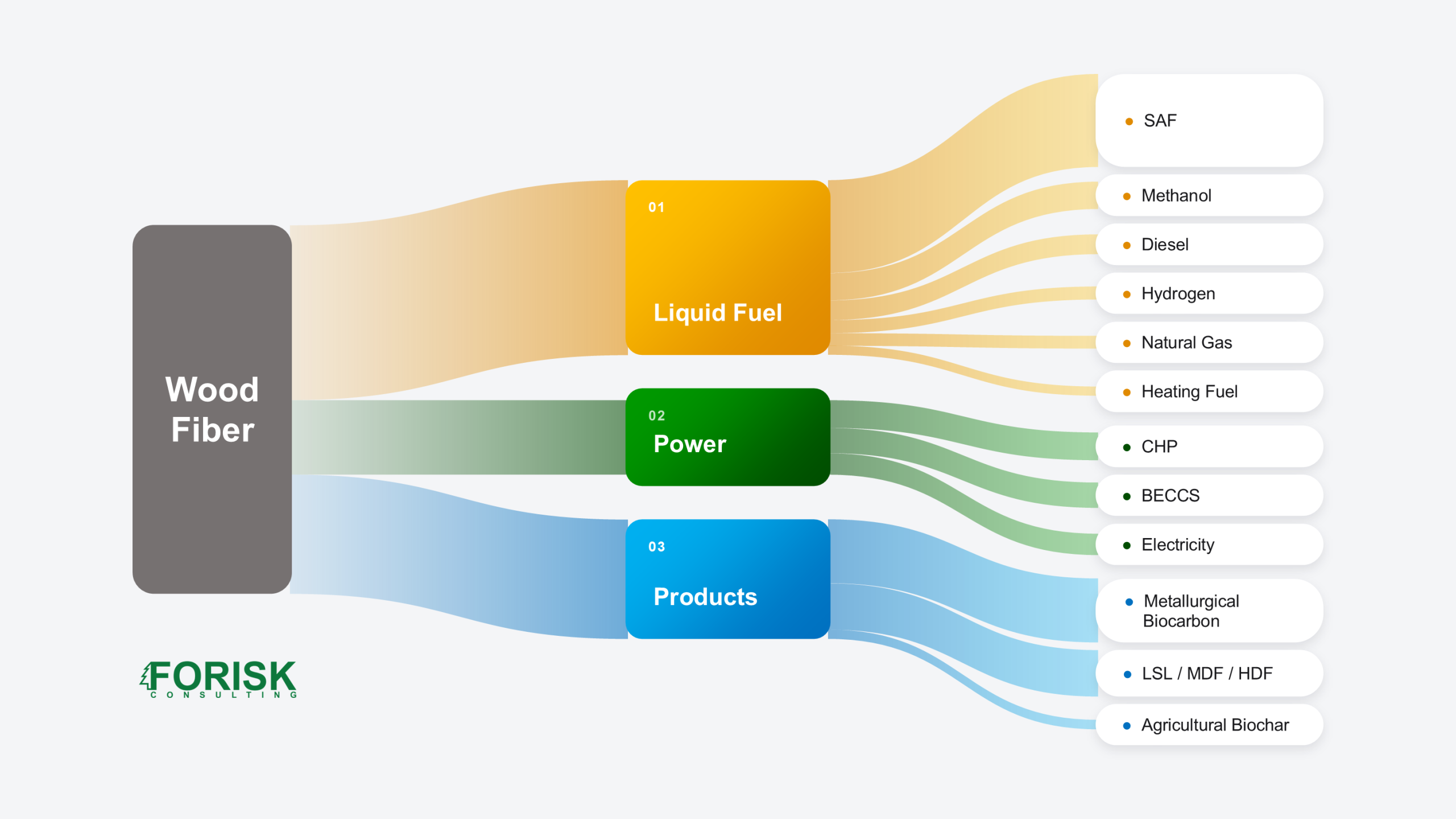
Data Source: Forisk Consulting. Note: Band width indicates wood use by 2029 (in green tons).
For the full results and conclusions, including sector profiles with key drivers, see the Q4 2026 Forisk Research Quarterly report.
To learn more about the Forisk Research Quarterly click here or email Nick DiLuzio at ndiluzio@forisk.com.
Leave a Reply